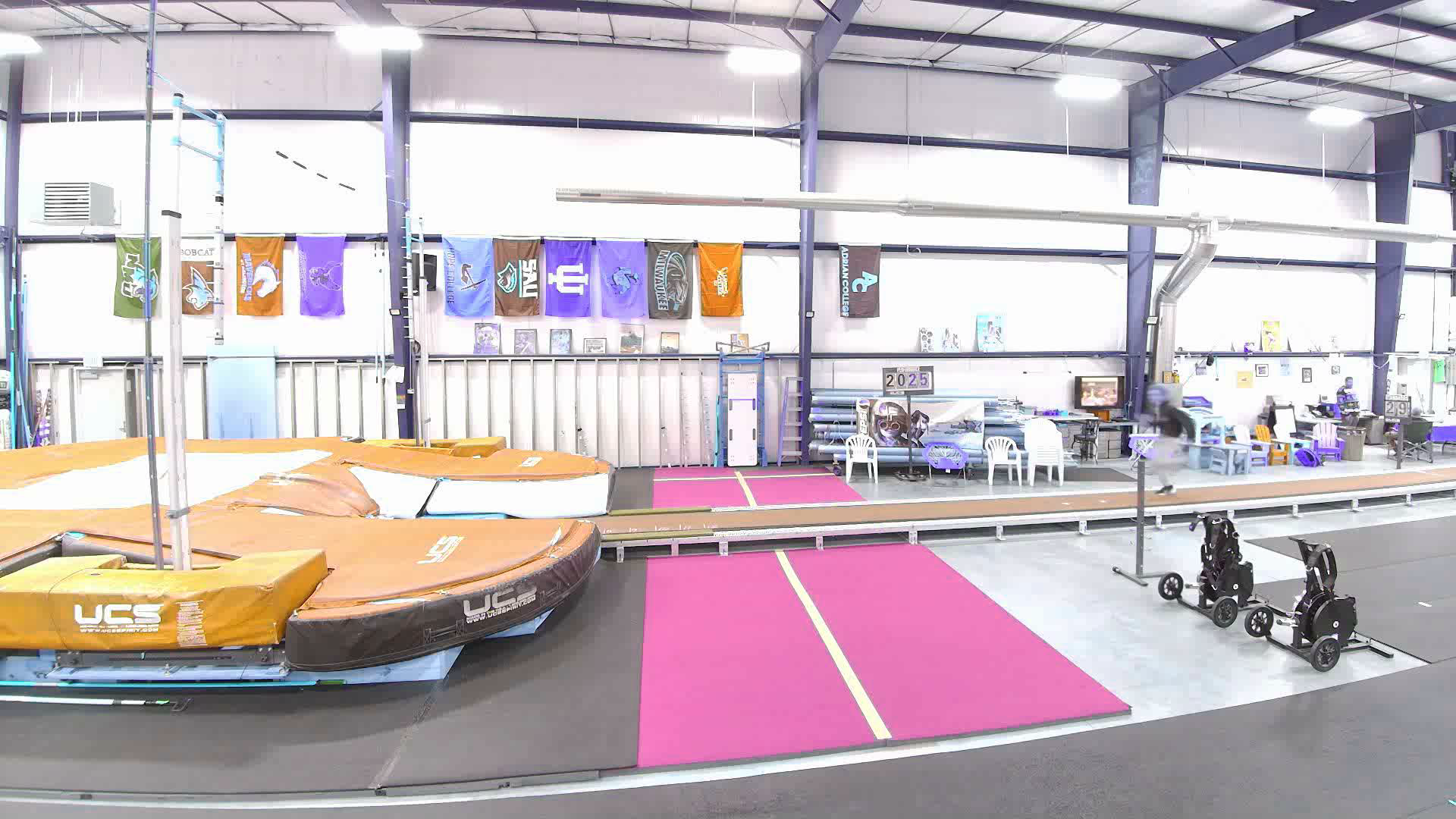
Separate the vision jobs
Scene segmentation supplies runway and pit geography; the vault-phase model remains responsible for finding the active vaulter and understanding the attempt.
Computer vision + live operations
A multi-camera capture and clip-delivery system with two custom computer-vision models and more than 30,000 labeling-ready frames.
The product
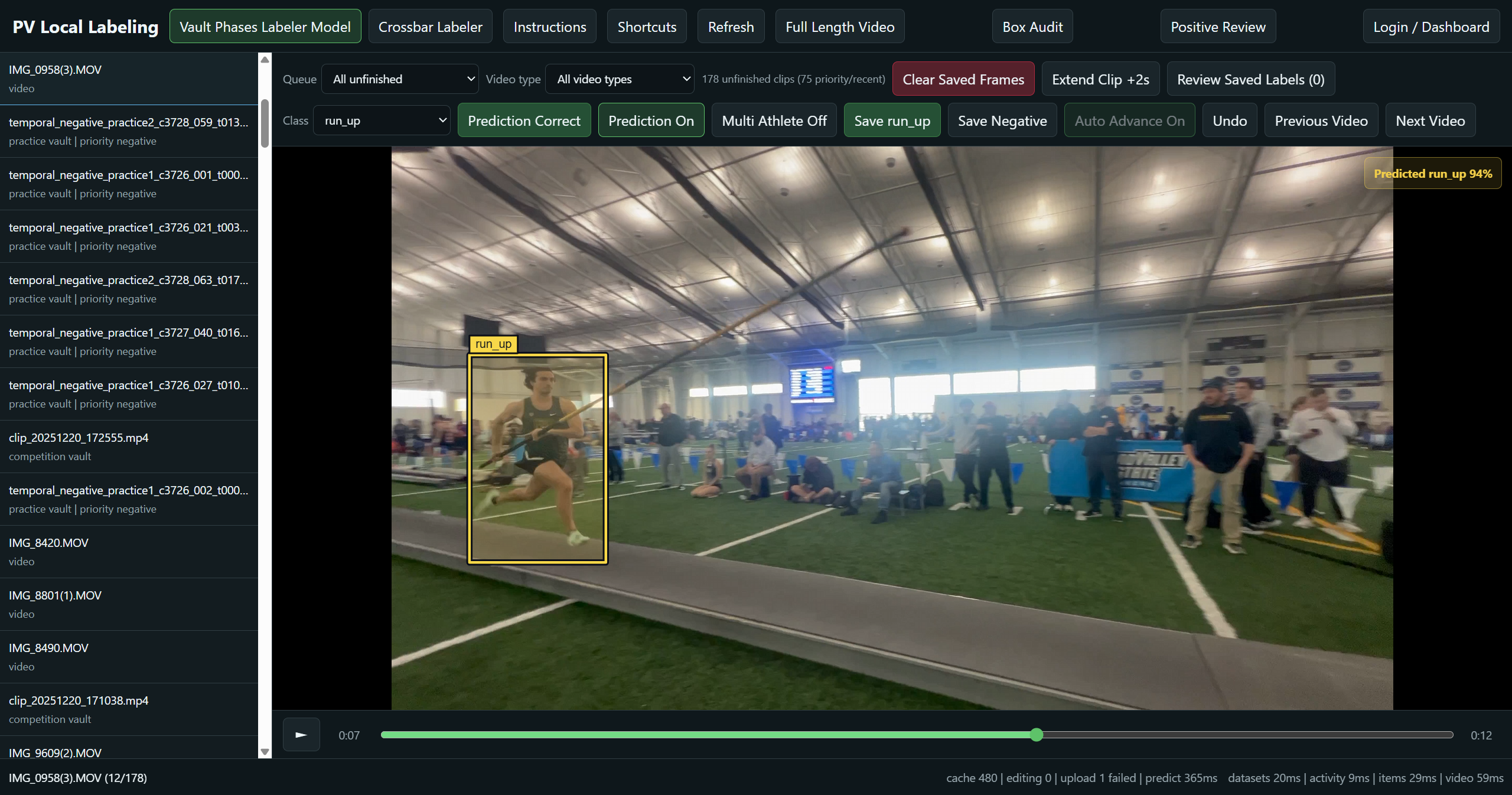
This system connects physical cameras and a live runway workflow to software that identifies attempts, manages athletes, creates clips, supports model-assisted labeling, and delivers video. I built the data pipeline and trained separate models for scene segmentation and vault-phase detection, combining local, latency-sensitive Python tooling with a hosted FastAPI application and cloud media storage.
Model training
The scene-segmentation model learns the physical geography of the runway and landing pit. The vault-phase model detects the active athlete and classifies phases such as the run, plant, takeoff, top of jump, landing, and walk-off. Keeping those responsibilities separate makes the system easier to evaluate and safer to improve.
The live labeling workspace now contains 30,605 training-ready frames: 22,027 positives and 8,578 negatives. The current published vault-phase model was trained and validated on a 15,579-image split, while the segmentation model was refined on 397 carefully reviewed polygon masks.
Extract candidate frames from real practice and meet video.
Label and review phase boxes, negatives, runway masks, and pit masks.
Train and validate YOLO checkpoints against stable dataset splits.
Publish a candidate only when it beats the current same-split baseline.
Architecture
A public, high-level view of the system. Credentials, private data, deployment identifiers, and source code remain protected.
PTZ and fixed cameras capture live attempts
→Python, FFmpeg, OpenCV, segmentation, vault phases, Face ID, and clipping
→Accounts, check-in, roster, labeling APIs, and two-server failover
→Neon/Postgres, Cloudflare Stream, and R2
→Browser, Expo mobile, check-in station, and labeling workspace
Engineering decisions
Scene segmentation supplies runway and pit geography; the vault-phase model remains responsible for finding the active vaulter and understanding the attempt.
Candidates are evaluated on the same split as the published checkpoint and promoted only when validation mAP50-95 improves.
Capture and inference stay near the cameras, while account, roster, model-labeling, and clip metadata are coordinated by hosted services.
In the field
Camera position, lighting, athlete motion, hardware recovery, and capture timing all shape the software design.